In this article, let’s explore the chronology of major events that set the path for modern Yemen starting from the 1970s till 1990.
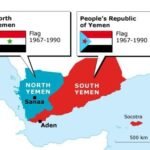
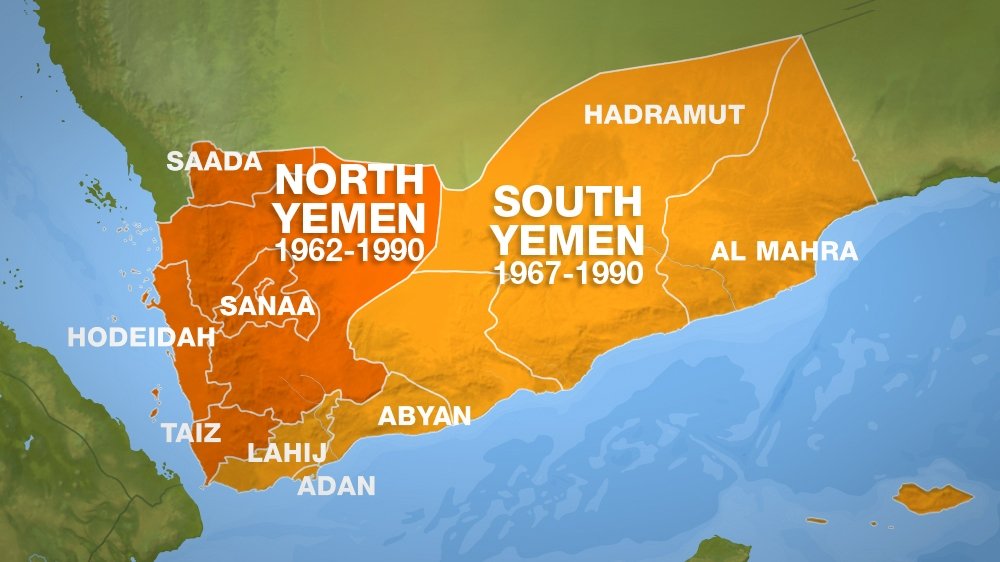
1970s – South Yemen or People’s Democratic Republic of Yemen developed as a mostly secular society ruled first by the National Liberation Front, which later morphed into the ruling Yemeni Socialist Party. The country received significant foreign aid and other assistance from the Soviets.
North Yemen or Yemen Arab Republic was a republic governed nominally under a constitution adopted in 1970, though policy making remained with a relatively progressive military elite that worked closely with civilians that included technocrats, tribal leaders, and other traditional conservative notables. (Ref : https://en.wikipedia.org/wiki/North_Yemen)
1972 – Yemenite War of 1972 – Fighting erupted between North Yemen, supported by Saudi Arabia and South Yemen, by the Soviet Union.It was short-lived ending inthe28 October 1972 Cairo Agreement, which set the plan to unify the two countries.
1978
Ali Abdullah Saleh became president of North Yemen.
1979
Yemenite War – Another short-lived fighting broke out between North and South in February/March 1979, with North Yemen accusing the South of aiding the rebels in the north and crossing the border.
1980s
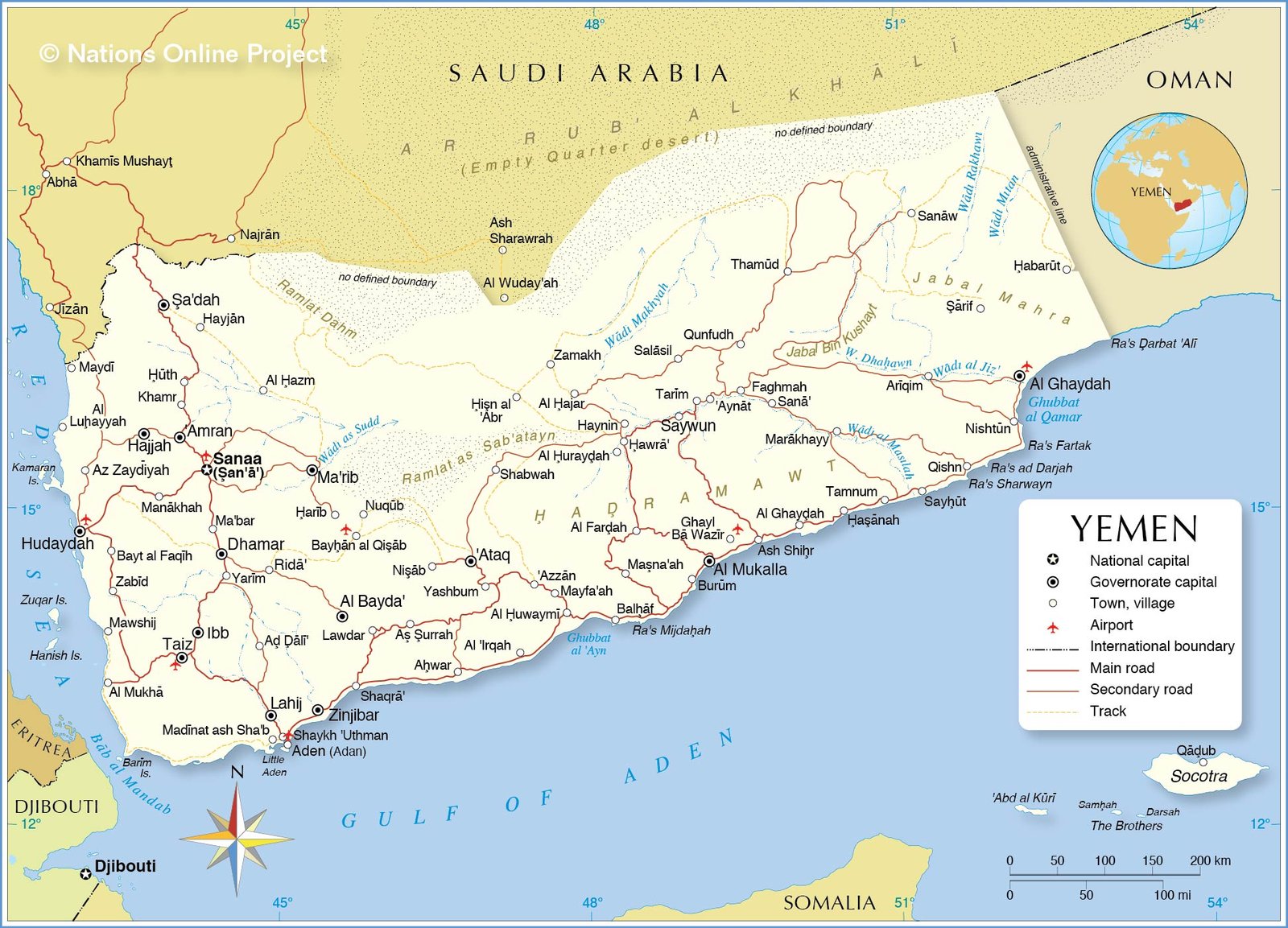
In the late 1980s, oil exploration near the border between the two nations – the Marib Governorate in the North and the Shabwah Governorate in the South – spurred interest in developing agreements to exploit resources there and lift both nations’ economies.
1986 –January 13 – South Yemen Civil War – The Socialist Party split into two factions: al-Toghmah, loyal to Abdel Fattah Ismail, (who was removed from leadership position and had gone into exile in 1980) and al-Zomrah, loyal to Ali Nasir Muhammad (Ismail’s successor). On January 13, 1986, bodyguards of Ali Nasir Muhammad opened fire on members of the Yemeni Socialist Party politburo as the body was due to meet. As most politburo members were armed and had their bodyguards, a firefight broke out. Ali Nasir’s supporters were not in the meeting room at the time. So the assassination of the rebel leaders was planned. This was also clear from the pre-recorded communique broadcast on official Aden Radio in the afternoon of January 13, announcing that the four Politburo members who had attempted to assassinate the president had been “tried and condemned to death by a special committee of the Politburo and executed forthwith.” No such trial had in fact taken place, and two of the four were still alive when the message was broadcast.
(Ref : https://merip.org/1986/07/the-last-days-of-ali-nasir/ )Twelve days of street fighting in Aden followed until the hard-line Marxists gained control and President Hassani was driven into exile. Thousands were killed in the South Yemen Civil War. President Ali Nasser Muhammad fled to the north.
(Ref : https://populartimelines.com/timeline/Yemen/full ).
Vice-president Ali Ahmad Nasir Antar, Defense minister Saleh Muslih Qassem, and the YSP disciplinary chief Ali Shayi’ Hadi were killed in the shootout. Abdul Fattah Ismail survived the attack and tried to escape through a tank, but was killed later on that day as naval forces loyal to Ali Nasir shelled the tank. So eliminating him was a clear intent.
On the first day of clashes, about 3,800 people died. Fighting lasted for 12 days and resulted in thousands of casualties, the ouster of Ali Nasir, and the deaths of Abdul Fattah Ismail, Ali Antar, Saleh Muslih, and Ali Shayi’. Some 60,000 people, including Ali Nasir and his brigade, fled to the Yemen Arab Republic. In the conflict that took the lives of nearly 6,000 people, Ali Salem al Beidh was one of the few high-ranking officials of Abdul Fattah’s faction who survived. The conflict resulted in the demise of much of the Yemeni Socialist Party’s most experienced socialist leadership cadre, contributing to a much weaker government and the country’s eventual unification with North Yemen in 1990.
1988
May – The two governments came to an understanding and agreements to renew discussions concerning unification, to establish a joint oil exploration area along their undefined border, now called the Joint Investment Area, by the Hunt Oil Company and Exxon. The same month, they formed the Yemeni Company for Investment in Mineral and Oil Resources (YCIMOR).
1989
Feb 16 – Heads of states of Egypt, Iraq, Jordan and Yemen announce the formation of the Arab Cooperation Council.
Nov – Ali Abdullah Saleh of North Yemen and Ali Salem al Beidh of South Yemen jointly accepted a draft unity constitution (originally drawn up in 1981), which included a demilitarized border and border passage by Yemenis on the sole basis of a national identification card and a capital city in Sanaa.
1990
May 22 – Yemeni unification – The Yemeni unification took place on 22 May 1990, when the People’s Democratic Republic of Yemen (South Yemen) was united with the Yemen Arab Republic (North Yemen), forming the Republic of Yemen.
Ali Abdullah Saleh of the North became Head of State, and Ali Salim al-Beidh of the South became Head of Government. A 30-month transitional period was set for completing the unification of the two political and economic systems.
A unity constitution was agreed upon in May 1990 and ratified by the populace. It affirmed Yemen’s commitment to free elections, a multiparty political system, the right to own private property, equality under the law, and respect of basic human rights.
Shortly after Yemeni voters approved the unification constitution, a series of unexplained armed attacks on political figures began to mar the path to peaceful elections.
Institutions of civil society continued to develop, as political parties openly participated in the system and scores of opposition newspapers and magazines flourished. At the same time, the climate was marred by incidents of political violence by unidentified forces.
For more details on these events please read my article, Global conflicts under the radar – Part XXIII –Yemen, which is available on half-yearly subscription.